Showing posts with label Korea. Show all posts

Mar 14, 2016

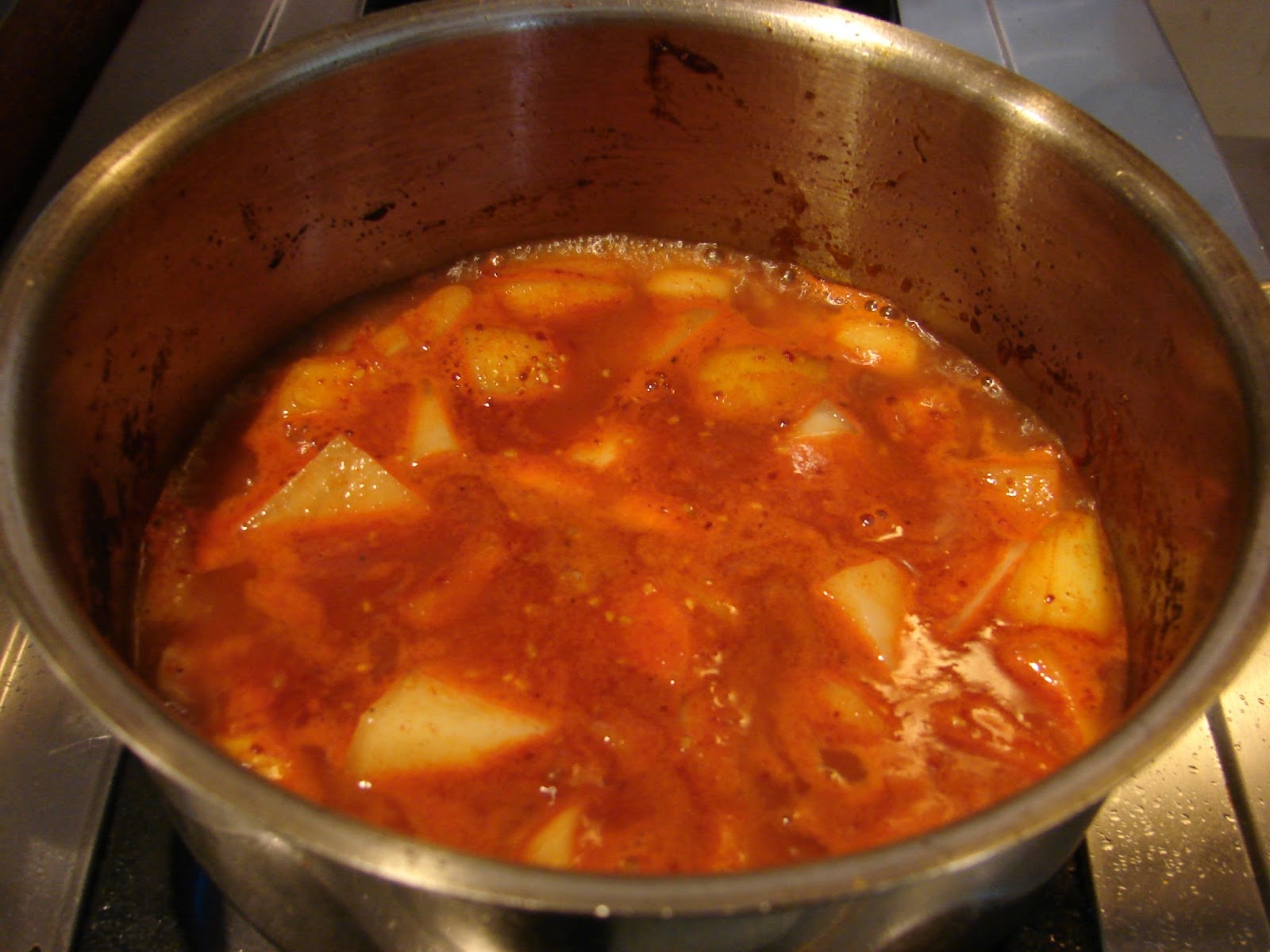
Making Spicy Korean Chicken Stew

Cookbooks are one of the most popular selling genres and now people can turn to the internet for recipes plus we all have family recipes; but, the best way to learn a new recipe is to take a cooking class.  John and I have enjoyed cooking classes in several countries and we always learn more than something new to cook.

When John and I were in Seoul, Korea, we took a cooking class at O’ngo Food Communications. We made several dishes including Spicy Chicken Stew. The teacher/chef, Hyejin Kim, said it the recipe that more people requested to learn how to make. I would have thought kimchi would be the most requested.  Kimchi is the best known Korean food. It is veggie dish that has a unique flavor. Not my favorite so we didn’t sign up for that class.

There was another couple in our cooking class which made the
class more enjoyable and when we finished we dined together enjoying the food we made.  The chef joined us and the discussion led to table etiquette and how they are different in each country.

Politeness and respect of elders is very important to Koreans. Chef Kim said that while manners have relaxed in Korea just as they have elsewhere many families try to retain the old ways. Korean meals consists of several dishes placed on the table family style to be shared by everyone. The oldest person sits down first,
 and after everyone else is seated, eating can begin when the oldest person picks up their chopsticks. Guests should try to eat at the same pace as the oldest person. When offered an alcoholic drink it is considered impolite to refuse, especially if offered by an elder. If you do not want more to drink do not empty your glass/cup. When offered more food, and, you would like more, decline twice and then accept. Leaving a little food on your plate at the end of the meal indicates the host has provided enough food. Koreans eat quietly saving discussion for after dinner. “Clean platers” is not the way of things in most Asian countries.  There is no point in saving room for dessert because there often is no dessert. The last course, in lieu of the typical dessert, is usually fresh fruit. Koreans eat quietly, saving discussion for after dinner.


Spicy Korean Chicken Stew (Dak Dori Tang)
1 and half to 2 lbs bone-in, skin-on chicken pieces (drumsticks, breasts, an/or wings)
2 onions cut in quarters
4-6 potatoes, peeled and cut to wedges
1 large carrot, peeled and cut to about 1-inch pieces
2 scallions, chopped coarsely to 1-inch long pieces
1-2 tbsp oil (enough to cover the bottom of the cooking pot)

Sauce
1 tbsp chili sauce
One-half tbsp soy sauce
1 tsp chili powder
One-half tbsp.
4-6 cloves of garlic, minced
One-half tbsp sugar
One fourth tsp black pepper
1 tsp sesame seed, crushed
 1-2 cups of water

Cut all vegetables, set aside. Mix all the sauce ingredients (not the water), set aside. Put oil in cooking pot (can use a crockpot) on medium heat for three to four minutes. Add vegetables and chicken slowly being careful that the oil doesn’t spatter. Sear for four to five minutes stirring occasionally. Add sauce mixture and water.  Bring to a boil. Lower heat to medium. Cook about one-and-half to two hours, or until all ingredients are cooked, and sauce has thickened.

Sep 1, 2014

Seoul is the bustling capital city of South Korea and an excellent gateway city to the rest of South Korea and Asia. The techie, prosperous city has been called “The Miracle on the Han River” due to its transformation from the destruction caused during the Korean War to a thriving city. These are my favorite things to do in Seoul.

1.Bus Tour: Get acquainted with the city on the hop-on-hop-off bus tour. The ticket is good for the day and can be purchased on board. There are several routes to choose. Board at 9 a.m. and take it once around deciding what to get to visit. The Downtown-Palace Course is probably best for first-time visitors. 
2.Best View: For the best view of the city head to N Seoul Tower with a 360 degree city view and 32 LCD screens that relate the 600-year history of Seoul. The revolving restaurant offers excellent views. It is a place for romantics based on the Locks of Love on the nearby fence. 
3.Gyeongbokgung Palace: Built in 1395, was the first royal palace built by the Joseon Dynasty, three years after the Joseon Dynasty was founded. It is located in the heart of the city not far from where the city bus tour starts.  Give yourself at least an hour to stroll around the pavilions and halls within the palace's spacious walled grounds. 

4.Changing of the guard: In ancient times the royal guards protected the Gwanghwamum Gate.  The 20-minute impressive ceremony is reenacted several times a day with the beating of the giant drums and guards in full regalia.  Every effort has been exerted to keep the ceremony authentic. It is a rare chance to get a glimpse into a traditional event.
5.Folkloric Museum: Explore 4000 years of Korea history at the National Folkloric Museum. Learn about the Korean way of life throughout the years. The open-air exhibition area includes jangseung spirit posts to which villagers prayed to ward off disaster.  The museum also offers a variety of classes are offered from martial arts to paper crafts. 
6.Free walking tours: Seoul offers nine free walking tours in seven
different areas offering insight into Korean culture and history. Options include tours of the palaces, city walls, gardens, and Hanok Village.  
7.Shopping: Today the word “Gangnam” is associated with a style of music but is an area known for shopping where there is everything from designer items to vintage clothing.  It is a favorite area of the young and fashionsitas.

8.Cruising: The Eland Cruise offers several short cruises on the Hangang River. It is a great way to relax while enjoying the scenery around the river that flows through Seoul. There are themed cruises with music, magic and/or lunch or dinner. 
9. Food: One of the best ways to experience a culture is by taking a
cooking class. O’ngo Food Communications offers cooking classes, restaurant tours, and even one on how to experience street food. There are cooking classes for the beginner and professional along with a Halal class. 
10.DMZ: The best way to experience the Demilitarized Zone, one the world’s most infamous borders, is on group tour. The guide offers information on the DMZ, the Joint Security Area and the opportunity to enter the Third Tunnel of Aggression said to be one of the ways the North Koreans planned to invade the South.


Feb 9, 2014

Take a cooking class at O'ngo Food Communications in Seoul, Korea

When John and I were in Seoul, Korea we took a cooking class at
O’ngo Food Communications. The school was conveniently located in the center of Seoul and offered a variety of Korean cooking experiences plus several cooking tours in Seoul and other parts of Korea. Tours range from three hours to several days. I would have loved a tour that introduces people to street food. Street food is what the locals eat but like many tourists we are hesitant to try it – most of the time.


During the class we made two typical recipes: Spicy Chicken Stew and Mushroom Japchae. Both were excellent but the Mushroom Japchae seemed like the easiest one to recreate at home. Mushroom Japchae is a popular Korean dish that is often served at birthdays.  Literally translated ‘japchae’ means ‘stir fried vegetables.’ Japchae has been popular since the 1600s when one the king’s subjects created the dish for a special occasion.  The dish so pleased the king that the man was elevated to Secretary of the Treasury. Typically it is usually served as a side dish but it can also be used as a main dish. In Korea a meal consists of several dishes that are placed on the table and people help themselves using their chopsticks to serve themselves. 

John and I have learned but not mastered the use of chopsticks.

Most places will supply westerners with silverware. In Korea a spoon accompanies the chopsticks and is used for wet items and for rice.  Unlike other Asian countries lifting a bowl of rice to the mouth and using the chopstick to push the rice into one’s mouth is not the usual practice in Korea. Use the spoon.  Chopsticks are placed to the right of the plate pointed away from the table edge. When not in use the chopsticks should be placed on the rest that is provide thus avoiding dirtying the table or rolling off the table. Putting chopsticks upright in a bowl of rice is impolite as it looks similar to incense sticks thus reminding people of a funeral dinner when it represents the spirits of the dead eating the food.  When the incense burns down then the spirits are full.


I love the saying I read years ago but cannot attribute it an author.  One-third of the world eats with chopsticks, one-third with their fingers, and one-third with silverware – and everyone is doing it correctly.


Mushroom Japchae
Sauce
1 ½ tbsp soy sauce
½ tbsp sugar
1 tsp finely chopped garlic
1 tsp finely chopped scallion
1 tsp sesame oil
½ tsp sesame seed
½ tsp crushed ginger
1 shitake mushroom, Julianne
2 dried wood ear mushrooms, soak in hot water for 5 minutes

1 oz glass noodles

1 medium onion, Julianne
1 medium carrot, Julianne
1 oz small leaf spinach (can use arugula), Julianne

Mix the soy sauce, sugar, garlic, scallions, sesame oil, sesame seeds, and ginger to make the sauce.  Marinate shitake mushroom in 1 tsp of sauce for 10 minutes.  Boil glass noodles for six minutes then rinse with cold water then set aside. Sauté onions and carrots until tender – about two minutes. Remove from pan then in same pan sauté shitake and wood ear mushrooms. In pan add cooked noodles, sauce, spinach and all the rest of the ingredients. Sauté for 2 or 3 minutes. Other mushrooms can be used plus zucchini and asparagus can be added. 

May 22, 2013

Taking a Peek at North Korea


As part of our DMZ tour we went to Dora Observatory where it is supposed to be the best place to be the best place to see North Korea. First we had to go through a security check point that had Korean soldiers on one side of the entrance and American soldiers on the other.  We were told to bring our passports but no one checked them probably because the only non-military vehicles allowed are the designated buses which transport tourists from the nearby Imjingak Park into the secured area. The bus follows the curved road lined with signs warning about landmines to the top of Mount Dora.

 Inside the building there is a glass wall that looks out to North Korea.  A guide explains where the demarcation line is and what there is to see. And, we are told we can only take pictures from behind the yellow line. I didn’t see any yellow line so took a picture and was promptly told not to.  The yellow line was outside and away from the viewing area. Outside there are binoculars for looking into North Korea where one can see a statue of the former ruler, Kim Il-Sun; the Propaganda Village; and sometimes as far as the city of Kaesong. The Propaganda Village is called The Peace Village in the North. It is one of two villages permitted in the DMZ in accordance with the 1955 armistice that ended the Korean War. According to those in South Korea the village is a sham with brightly painted buildings but no residents. There is not a lot to see from the observatory, mainly fields and a tall flag pole. In the 1980s South Korea built a 323-foot flagpole after which North Korea responded with one 525 feet high, which was the second tallest in the world at that time. It was called the “Flagpole War.”

From the Observatory we went to tour the Third Tunnel, a massive North Korean-dug tunnel which was planned as a pathway for invasion to the South.  It was discovered in 1978 based South Korea.  The United Nations declared it an act of aggression by North Korea.  A total of four tunnels have been discovered but it is thought that there may be as many as twenty.  A gallery of images explains the events surrounding the building of the tunnels.  The DMZ has become a nature preserve with all sorts of birds and other animals free to roam.
 on information from a defector. The tunnel is just over one mile long and about 240 feet below ground. Visitors put on hard hats before walking down into the tunnel. Supposedly it would have been possible for 30,000 armed men per hour to invade

The tour also included a stop at Dorason Station, a pristine train station built in 2001 in the hopes that trade with North Korea would resume.  A sign in the lobby reads, “Not the last station from the South but the first station toward the North.” However, given the current rhetoric from North Korea it doesn’t seem to be likely in the near future. Like all tours we made the obligatory stop at a gift shop and a specialty shop.  We visited a ginseng store where the cultivation of ginseng was explained. It was mildly interesting but what caught my attention was the price. Most of their packages were $100 or more! 

May 6, 2013

DMZ tour from Seoul, Korea


One of the most popular day tours in Korea is to the DMZ and Panmunjom.  With all the news about the 29-year-old North Korean leader, Kim Jong Un, I was curious to see if tours to the border area between North and South Korea were still possible. The two-mile wide DMZ runs about 160 miles along the 38th parallel cutting the Korean Peninsula in half dividing Korea into two parts.
John and I wanted to book a full day tour to the DMZ and Panmunjom but visiting Panmunjom was not allowed while we were there because they were holding military maneuvers. This was understandable considering the rhetoric we were hearing on CNN but we were told that each side routinely holds “shows of strength.” The Koreans we talked to said they were not really worried. They said, “It is the same-old, same-old.  We have been living with it for 60 years.”

Panmunjom, officially called the Joint Security Area by the United Nations. is where the armistice
agreement was signed in 1953. It is a “no-man’s land” with no side in charge.  I understand that it is basically a deserted village and that the DMZ is actually more interesting. 

The bus ride from Seoul north along the river was interesting because it was lined with barbed wire and guard houses at frequent intervals. At one point our guide pointed out that the other side of the river was North Korea. She said that recently a North Korean swam across the river and knocked on the guardhouse and asked for asylum.

Our first stop was Imjingak, a park that was built to console refugees who left North Korea during the war. It is a fascinating place that combines historical artifacts with amusement rides.  The park has become a place for Koreans to relax and enjoy the out-of-doors but it is also a place where they can bow in the direction of their ancestral graveyards.  There is a view of the Freedom Bridge, a former railroad bridge across the Imjin River, used by repatriated POWs/soldiers returning to South Korea from the North. Also on view is a huge train riddled with more than 1000 bullet holes as a reminder of the war. 

Actually there are several interesting things including a high platform from which people can view North Korea but there isn’t much to see.  The Stones of Peace wall is a sculpture containing stones from 86 battlefields in 64 countries. It was dedicated on January 1, 2000 in the hope that the new century would be one that would see the unification of the North and South and world peace.
On the same day a 21-ton Korean-style Peace Bell was also dedicated in the hope that the 21st century would be “…a time of unification and peace for all mankind.”  We asked our guide who was very knowledgeable if we could ring the bell which was housed in a gated, temple-style pavilion. She said it was not allowed and was surprised when we pointed to a sign that said that people who were interested could ring the bell in the name of  “…unification, peace and hope...” She said she had never seen the sign and no one ever asked before but ran off to get the person in charge.  So for about $10 USD John rang the bell.  It was my favorite part of the stop in
Imjingak. 

Visiting Seoul, Korea

I am a fan of customer loyalty programs.  Using our points on United Mileage Plus for tickets on Singapore Air, John and I flew from Singapore to Seoul for $44. And, using our points from the InterContinental Priority Program we stayed seven nights free at Seoul’s Seongbuk Holiday Inn. This was our first trip to Korea. It had been on our “to-visit” list but we feared the weather at the end of March would be unpleasant.  That was not the case.  The weather was perfect for sightseeing.  We arrived late in the evening so missed the affordable ($15) bus connection into the city and took a cab.  The fare was $40 but the Korean cabs take credit cards so paying was painless.  Seoul has an excellent subway system but the cabs were reasonable and went directly where we wanted to go so we ended up taking cabs most of the time.

We took a cab to the Gwanghwamun Square where we boarded the $10 two-hour tour of the city. Not everyone was able to get on so some had to wait for the next bus.  It was possible to get on and off but we like to take such tours once around.  I was surprised at how hilly the city is and even more surprised when we stopped near the Seoul Tower at a panoramic viewing area - there were buildings as far as I could see.  Amazing! Ten million people live in the city.  

We debussed at Stop 27, the last stop, and next to one of the Gyeongbokgung Palace side entrances. It worked out perfectly because just inside the entrance was the National Folk Museum, a traditional Hanok Village. Admittance was free and there was a self-guided brochure. There were several buildings and displays that depicted the traditional Korean life including the Street to the Past with typical houses, an ox-drawn millstone, and totem poles.  We were able to continue walking to the back gate of the Gyeongbokgung Palace, just one of five great palaces built during the Joseon Dynasty. It has gone through many changes since it was first built in 1395. Between the Japanese invasion in 1911 to the Korean War many of the buildings were destroyed and/or damaged. Nearly half of the original buildings are still standing or have been reconstructed. The palace grounds are extensive and beautiful.  Luckily, we reached the main gate just in time for the changing of the guard ceremony. It was an amazing, colorful ceremony with drums, flags, traditional costumes and pageantry – so much more extensive than I expected. Not to be missed for sure.

We signed up on-line for a tour of the Secret Garden, which is part of the Changdeokgung Palace. Independent touring of the garden is not permitted. The garden is huge. I wish we had been there later in the year when things are in bloom. One day we took an afternoon tour on the river. The tour was great but, once again, we were the objects of curiosity for the local people. They love to have their picture taken with us.

One afternoon we took a cooking class at O’ngo Food Communications.  Cooking experiences are fun – and tasty ways – to explore a culture.  We made Spicy Chicken Stew and Mushroom Japchae. While I could not develop a fondness for kimchi the food we made was excellent.  But, my favorite Korean dinner was Beef Bulgogi.